

Ingrown Toenail Treatment St. Catharines — Minimally Invasive, Fast, Lasting Relief
Ingrown Toenail Treatment St. Catharines — minimally invasive, stitchless procedure with fast relief & quick recovery. Trusted foot clinic, registered chiropodist Michael Mesic. Book now!
Many patients are surprised by how quick, effective, and minimally painful our ingrown toenail treatments are. After experiencing our modern, stitchless procedures, people often say they wish they hadn’t endured years of discomfort based on older “horror stories” from non-specialist clinics. Our approach focuses on proven, minimally invasive techniques performed by Ontario registered chiropodist (foot specialist) Michael Mesic, Doctor of Podiatric Medicine who has over 20 years experience, having been trained at leading medical institutions throughout North America.
Why Choose Our Minimally Invasive Corrective Procedure
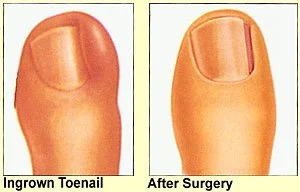
Service highlight: We offer a stitchless chemical matrixectomy, also called partial permanent nail avulsion or the P & A Procedure. This minimally invasive treatment typically allows patients to return to normal activities within days and has a very high success rate. We tailor every plan to your needs and lifestyle, aiming for the least invasive, most effective option.
-
Signs and symptoms
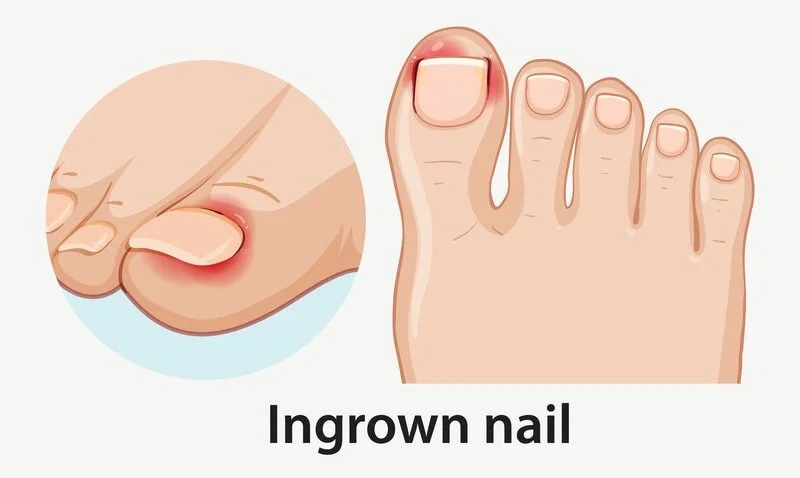
Pain and tenderness along the nail edge
Redness, swelling, or drainage (yellow or bloody)
Difficulty wearing shoes or walking; unpleasant odour
Common causes
Trauma to the toe
Poorly fitting shoes
Naturally curved or thick nails that predispose the nail to dig into the skin
Improper trimming
An ingrown nail behaves like a foreign body that pierces the skin and can introduce infection. If left untreated—especially in people with diabetes or poor circulation—an infection can spread and, in severe cases, lead to bone infection.
-
Without proper care, the nail can continue to grow into the toe, causing chronic pain and recurrent infection. In high-risk patients (for example, those with diabetes or peripheral vascular disease) an untreated infection can progress, sometimes requiring IV antibiotics or more invasive surgery. Prompt treatment reduces complications and speeds recovery. Ignoring the problem will not make it go away.
-
Overview: Antibiotics may temporarily reduce infection, but the ingrown nail border must usually be removed to prevent recurrence. Below are the common procedures we offer; “permanent” means the nail root is destroyed chemically to prevent regrowth, while “temporary” means the nail will likely grow back.
Debridement (Trimming)
What it is: Regular trimming and gentle buffing of the curved nail corners.
When we use it: For mild cases where surgery can be avoided. We evaluate each patient and prefer conservative care when appropriate.Slant‑Back Procedure (Wedge Resection)
What it is: A small wedge of the nail edge is removed.
Notes: Often done without local anesthetic but with a topical cold spray for comfort; provides temporary relief and may not prevent regrowth if the nail root is involved.Permanent Partial Nail Avulsion
What it is: The most common definitive treatment when trimming isn’t enough. A small sliver (about 3 mm) of nail including the root is removed, and a chemical is applied to the nail root to prevent regrowth.
Benefits: High long‑term success and permanent relief for the treated nail border.Temporary Partial Nail Avulsion
What it is: Similar to the permanent partial avulsion but without chemical destruction of the root.
When we use it: For first‑time ingrown nails or when slower healing is expected due to medical conditions. Relief typically lasts months, but regrowth is likely.Total Nail Avulsion
What it is: Removal of the entire nail, performed temporarily or permanently.
When we use it: When both nail borders are affected or the nail is very small. -
Comfort and safety: We only proceed when you are fully comfortable. Local anesthetic is used to numb the toe so the procedure is pain‑free.
Aftercare: We review wound care instructions and provide a dressing kit with gauze, bandages and provide a prescription for an antibiotic cream.
Follow up: We typically schedule a follow‑up to confirm proper healing in a couple of weeks and answer any questions.
If you’re tired of recurring pain from ingrown toenails, our Ontario registered chiropodist (foot specialist) Michael Mesic, Doctor of Podiatric Medicine can evaluate your condition and recommend the best, least invasive option for lasting relief. End the suffering. Call us today!