

Morton’s Neuroma Treatment St. Catharines — Trusted Ontario Registered Chiropodist
Morton’s Neuroma Treatment St. Catharines — Registered Chiropodist. Custom orthotics, shockwave therapy and targeted injections for pain relief. Book assessment.
Get an in‑clinic assessment by a trusted Ontario registered chiropodist for Morton’s neuroma — we assess your symptoms, biomechanics, and offer conservative care including custom orthotics, metatarsal off‑loading, shockwave therapy, injections, and footwear advice to relieve forefoot pain.
What is Morton’s neuroma
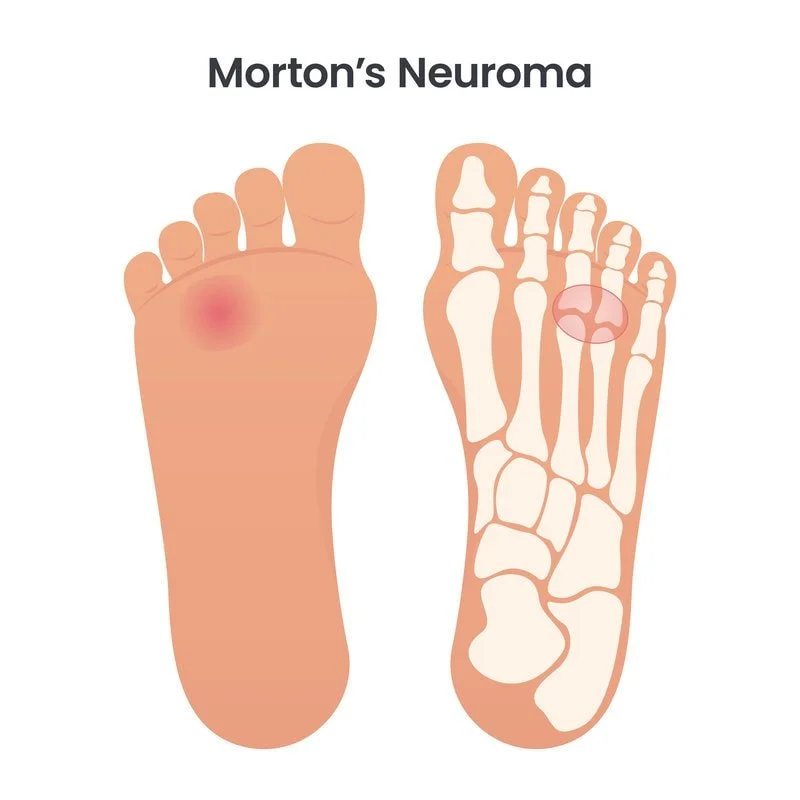
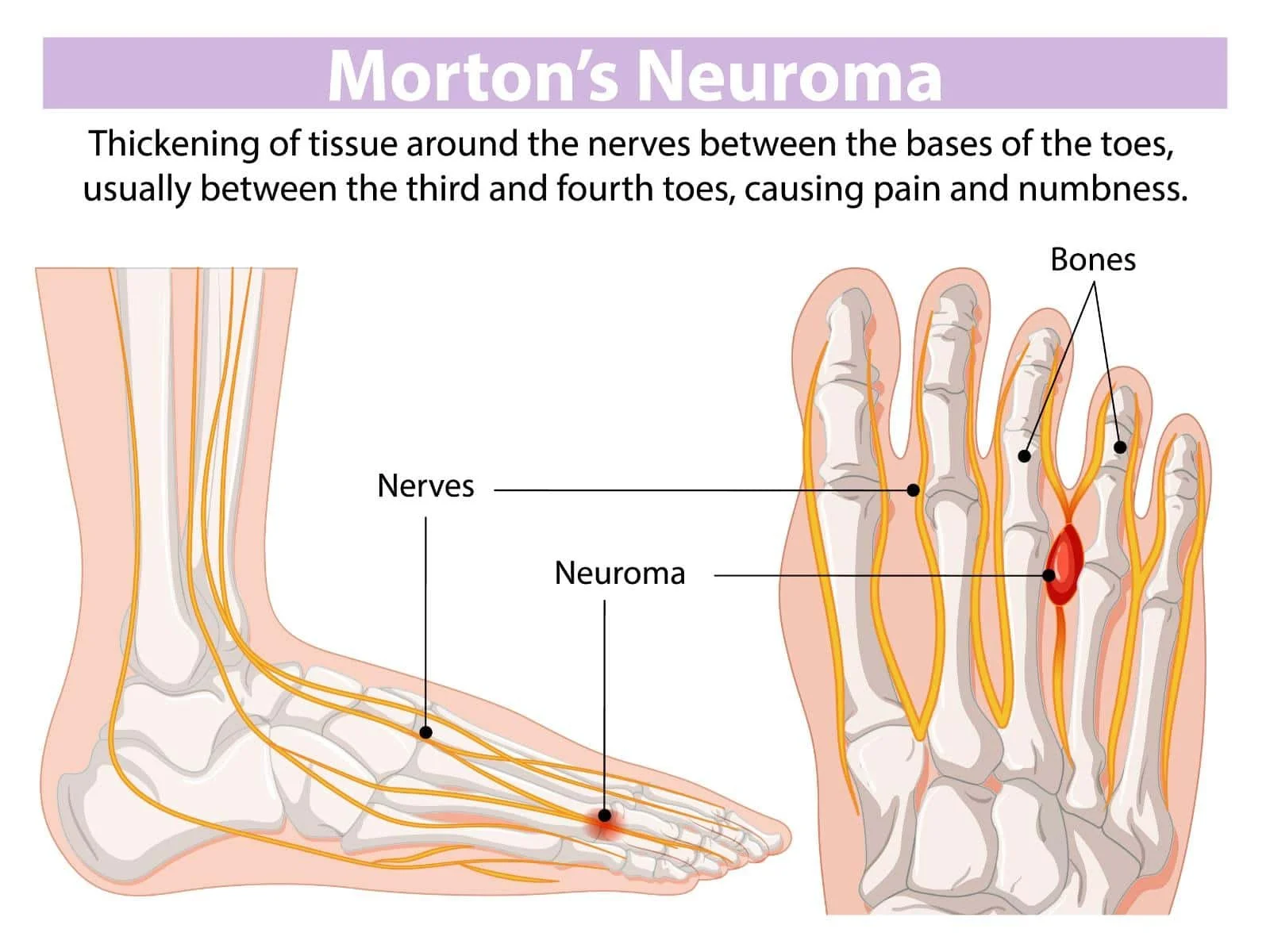
A Morton’s neuroma is a thickening of nerve tissue most commonly between the 3rd and 4th toes, caused by chronic compression and irritation in the ball of the foot. Symptoms often begin intermittently with narrow shoes or activity and can progress to persistent burning, tingling, numbness, or a “pebble in the shoe” sensation as the nerve becomes more irritated.
Why an assessment matters
We perform a focused in‑clinic assessment — symptom history, physical exam, gait and footwear review, and targeted tests — to determine whether your forefoot pain is likely neuroma‑related or due to another cause (stress fracture, metatarsalgia, hammertoe, or bursitis). Early assessment helps avoid unnecessary invasive treatments and guides the most effective conservative plan.
Common causes and risk factors
Anything that compresses the intermetatarsal space can trigger a neuroma: tight or tapered shoes, high heels, repetitive forefoot loading (running, racquet sports), and foot deformities such as bunions, hammertoes, or flat feet. Women are more commonly affected, often because of footwear choices that narrow the forefoot.
In‑clinic conservative treatments we provide
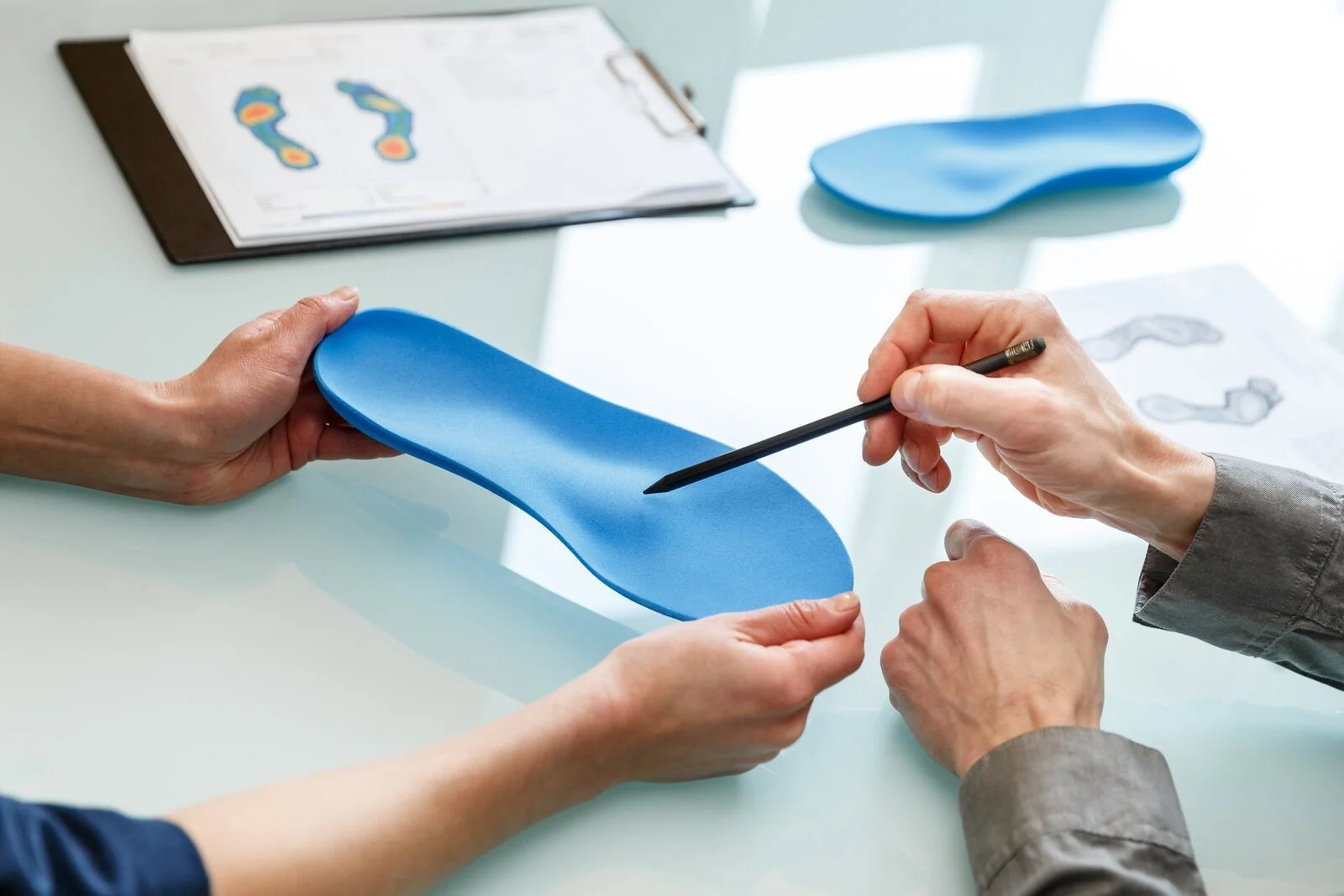
Custom orthotics with a metatarsal pad or forefoot off‑loading design to redistribute pressure and stabilize the forefoot — orthotics are a primary, evidence‑based option for meaningful symptom relief. Our orthotics are PFOLA-laboratory approved and are made in Canada using the most advanced 3D Scancast device because precision matters.
Padding, taping, and footwear advice (wide toe box, low heel) to remove the mechanical trigger.
Shockwave therapy as a non‑invasive option for persistent symptoms; many clinics report improved pain and function without incisions, though responses vary and multiple sessions may be needed.
Ice, activity modification, NSAIDs, and targeted injections (corticosteroid) when appropriate. Injection therapies are used selectively when conservative measures are insufficient.
When surgery is considered
Surgery is reserved for patients who do not respond to conservative care. Options include nerve decompression or excision; recovery and outcomes depend on the procedure and individual factors. We prioritize conservative pathways first.
Practical next steps and prevention
Book an in‑clinic assessment with a trusted Ontario registered chiropodist to evaluate symptoms and footwear.
Bring your regular shoes and note activities that trigger pain.
Early mechanical correction (orthotics, shoes, padding) often prevents progression and reduces the need for injections or surgery.