

Sesamoiditis Treatment St. Catharines — Registered Chiropodist
Sesamoiditis Treatment St. Catharines — Registered Chiropodist. Custom orthotics with off‑loading, injections and targeted rehab to relieve forefoot pain. Book assessment.
Persistent pain under your big toe? Book an in‑clinic assessment with our Ontario registered chiropodist — we assess sesamoid pain, provide targeted conservative care (custom orthotics, padding, off‑loading) and a clear plan to get you moving again.
What are sesamoids
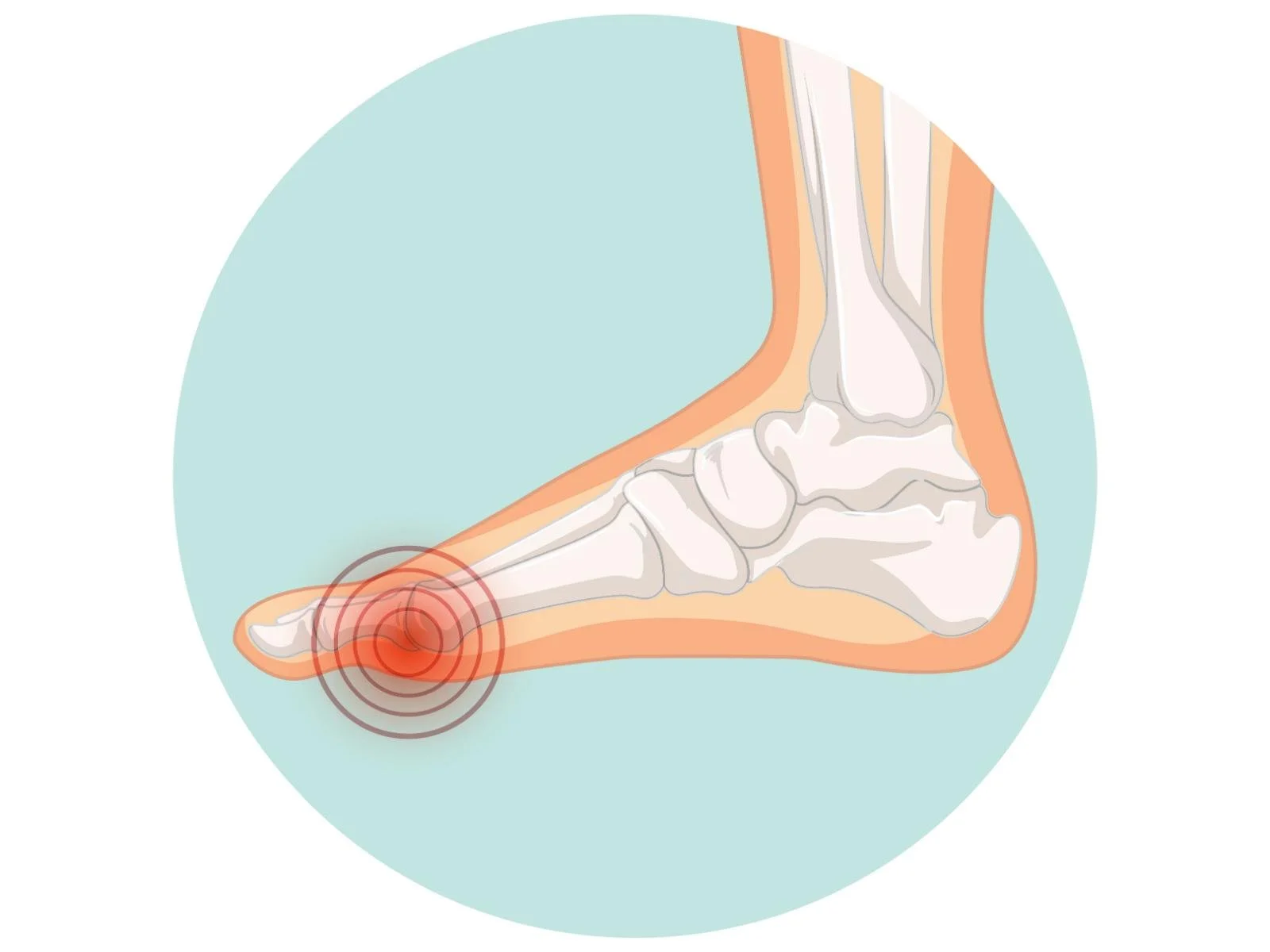
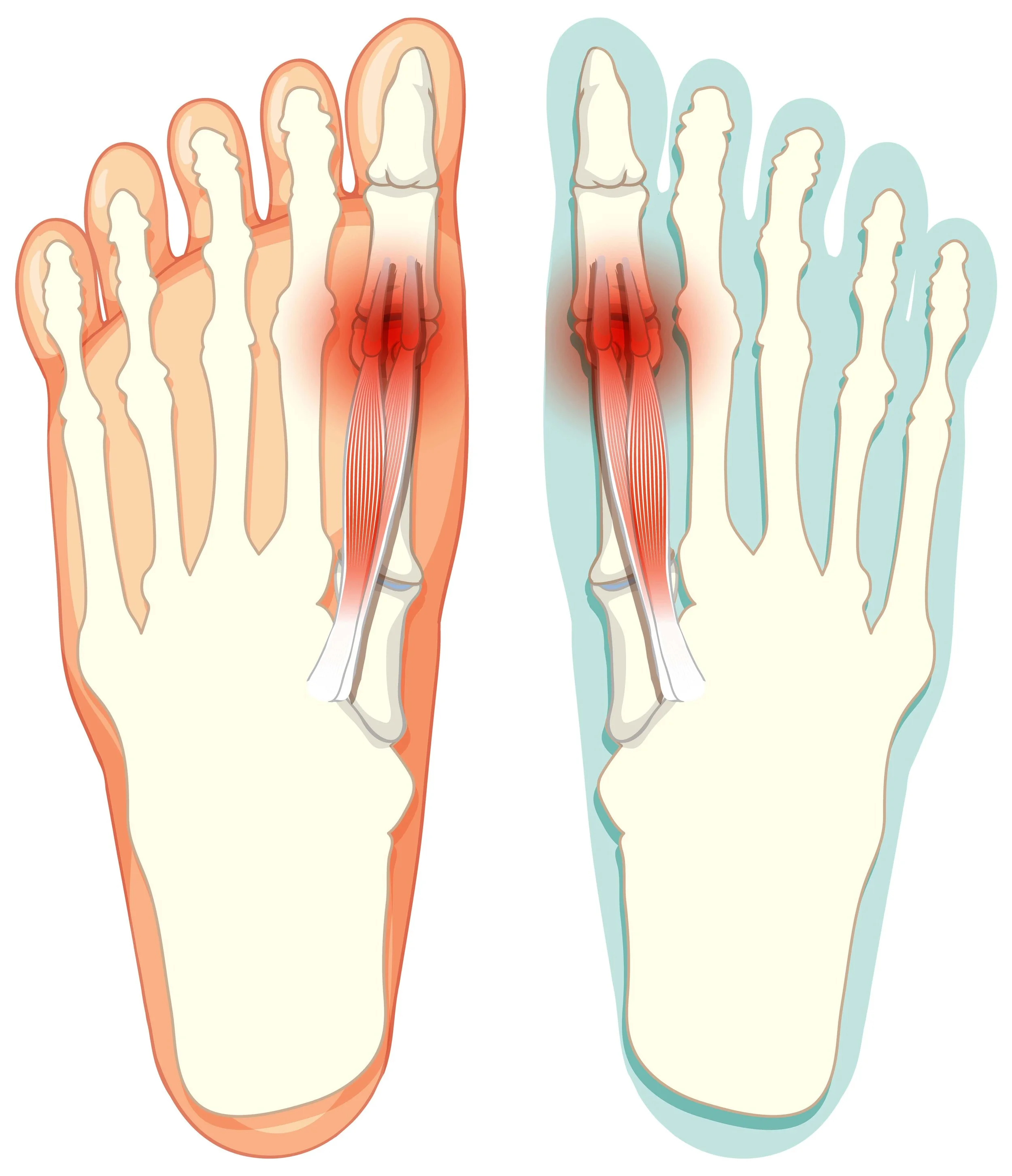
Sesamoids are two small, pea‑shaped bones embedded in the tendons beneath the big‑toe joint that act as pulleys and absorb weight during push‑off; they’re essential for normal toe mechanics and high‑impact activities. Sesamoiditis is an overuse inflammation of these bones and surrounding tendons that causes dull, activity‑related pain in the ball of the foot.
Who gets sesamoid problems and why
Activities that repeatedly load the forefoot — running, basketball, tennis, ballet — and foot types such as high arches or frequent high‑heel use increase pressure on the sesamoids and raise risk of sesamoiditis, stress fracture, or turf‑toe injuries. Early assessment identifies mechanical drivers so treatment targets the cause, not just the pain.
Signs we assess
Common symptoms include localized pain beneath the big‑toe joint, worse with push‑off, swelling, and difficulty bearing weight. Some patients report intermittent pain that flares with specific shoes or activities; others have persistent tenderness under the first metatarsal head.
In‑clinic conservative care we provide
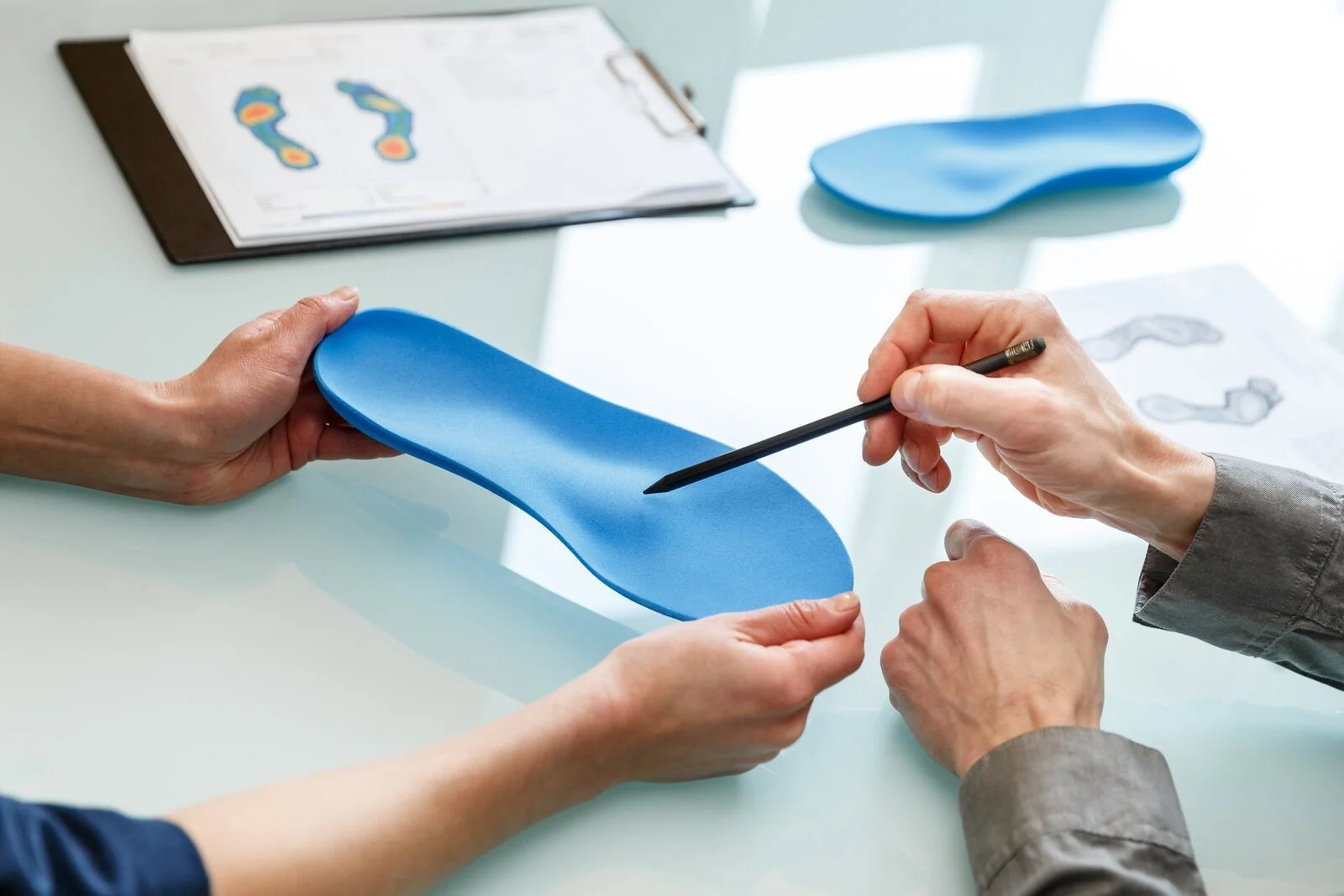
Custom orthotics with a sesamoid cut‑out or metatarsal pad to redistribute pressure — orthotics are a cornerstone of long‑term relief.
Padding, taping, and forefoot off‑loading to protect the sesamoids during activity.
Immobilization or a removable walking boot for acute or stress‑type injuries to allow healing.
Targeted rehab (range‑of‑motion, strengthening) and therapeutic modalities such as ultrasound or phonophoresis to reduce inflammation and restore function.
Steroid injections are used selectively for persistent inflammation; imaging (X‑ray, MRI, bone scan) is arranged when fracture or complex pathology is suspected.
Each conservative option is chosen based on your assessment and activity goals; surgery is reserved only for rare, refractory cases after prolonged non‑surgical care.
Prevention and practical tips
Break in shoes gradually, avoid excessive forefoot loading, choose supportive footwear with a roomy toe box, and use metatarsal pads or orthotics if you have high arches or recurrent forefoot pain. Early assessment reduces the risk of chronic pain or stress fracture.
Book an in‑clinic assessment with our Ontario registered chiropodist to assess your sesamoid pain, review custom orthotic options, and start a personalized off‑loading and rehab plan — early assessment improves outcomes and shortens recovery.